What Learning Technologies Support Fast Track LPN Programs Online?

Xylos AI team
AI Research & Editorial
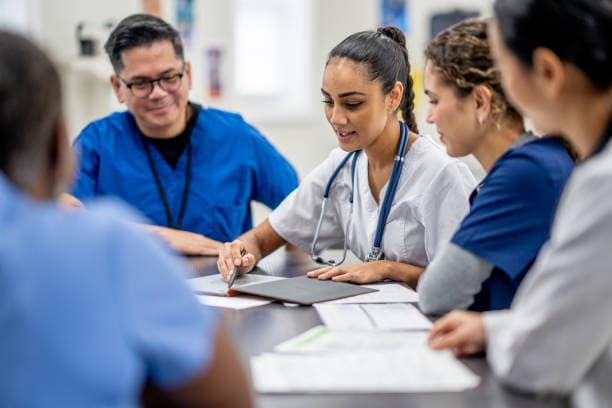
Nursing school is tough enough, and trying to do it while working, raising a family, and managing a multitude of other responsibilities can be daunting, at best. Students in a program need a way to get their studying done at home so they won't fall behind in the skills they need to be successful in a healthcare environment. This is where fast track lpn programs online come in, if they utilize online classes and learning so that the hands-on portion of the education is available as well. Innovations in learning technologies have altered the manner in which lessons are delivered, in what ways teachers educate, and how students show their progress, but not all technologies are beneficial just because they are new.
Learning Management Systems Keep Coursework Organized
Most online nursing programs will use some type of learning management system or LMS to deliver classroom content. Course sites such as Moodle, Canvas, and Blackboard can be accessed by students at any time to review lectures, submit assignments, take quizzes, check course notifications, and navigate class materials. It seems obvious, but an LMS can be a real help when the deadlines are getting tight. Many online students in accelerated or fast-track practical nursing programs don't have the luxury of wasting time on what's yet to come. Your LMS will show you the content of the class, your progress towards completion, and upcoming assessments. You may also be able to identify subjects you are still struggling with so you know what needs to be reinforced before the course ends. Just remember, it can't do the hard work for you, but it does save some good old-fashioned time.
Online Classrooms Enable Easier Access to Instructor Assistance
There's still a need for direct interaction with teachers in the online space. Recorded lessons are handy, but they don't cover everything. Virtual classroom platforms like Zoom and Microsoft Teams enable a teacher to deliver a lecture, walk through an assignment, have a quick review session, or field questions. A student who doesn't understand the concept of calculating medication dosages can have a quick chat and ask the instructor to walk through it again with them and their classmates, rather than flailing around with practice questions. Teachers can also project their screen for all to see or toggle to a digital whiteboard or digital breakout rooms to work on case studies in a small-group setting. This can help reduce the feeling of isolation that comes from learning online. However, it doesn't replace all the hands-on support. A student who is just logging on to a class and not actively participating and asking questions won't be able to clarify their doubts.
Nursing Simulation Software Builds Clinical Decision-Making Skills
One of the more valuable pieces of technology that you can find in a classroom now is simulation software. This software is designed to give student nurses a patient scenario that is as close to life as possible, and then work off of the data and patient response provided. For instance, the patient could begin to experience breathing problems, show some signs of a little bacterial or viral growth, or have a sudden change in vitals that the student has to quickly respond to, handle, and treat. The patient response could then be shown, and the errors explained in order to make sure that the student learned what they had done wrong. This ensures that student nurses can practice clinical reasoning skills without putting actual patients at risk and is especially valuable for those in faster-track programs, as there is less time in which to learn the material. It should not be substituted for actual practical experience, however, as students also need to learn to perform physical assessments, speak with patients, and know how to handle standard infection procedures.
Interactive Learning Tools Help Students Remember More
Goodbye memorisation: online flashcard apps. To be honest, studying an entire chapter once is not always enough to remember what you have read, especially when the dreaded exam time nears. Online practice tools provide an additional method of practicing. Digital flash cards, matching practice tools, quizzes, and even anatomy apps can be used by students to practice retrieval instead of passively reading about the material. For example, a student studying human anatomy could label an interactive diagram with body parts, names, and muscles, work through a tool using medical terminology, or use a different app to learn how to identify common medications and medication groups. Spaced repetition apps may be able to bring back the information at scheduled intervals. This is a handy tool for learning and revision since every nursing student has to learn an enormous amount of terminology and facts. Students need to recall information quickly, not merely recognise it when they see the screen. A little bit of practice every day during the week is actually better than a lot of study the night before, but you have to put in the time.
Mobile Learning Apps Enhance Learning Beyond the Classroom
Not all students can get to a desk and study for hours each night. Some work shift work, have children to care for, or a long drive to class. Mobile learning apps allow your students to go through course content, view short lessons, take quizzes, and access study notes on their smartphone or tablet. Having that flexibility can come in handy in an accelerated nursing course, when students are on tight schedules. A student can look over medication terms during his or her study break, or complete a short practice quiz just before a late-night study session. Even a few minutes of studying here and there can really add up over a few days of scattered time. There are limits to all of this. Some clinical diagrams, technical writing assignments, and math problems are best tackled on a larger screen, while students must be mindful of interruptions from messages and social media. The key is to use mobile apps for quicker recall and practice, and take the time needed for heavier cognitive lifting.
Adaptive Learning Technology Assists in Identifying Knowledge Deficiency
An adaptive-learning program adapts practice exercises to a student's performance. If a learner consistently struggles with a concept, the program might offer extra questions, further explanation, or related material, while students who show a sound understanding might progress to a more advanced topic. Adaptive learning can be useful in pharmacology, anatomy and physiology, and fundamental nursing calculations. Instead of moving through the curriculum at the same pace as the rest of the class, students can concentrate on areas requiring extra reinforcement. Some adaptive models also offer progress reports that detail areas of repeated misunderstanding. The one thing to watch for is simply that a high-scoring quiz or test may not guarantee a student is prepared to apply the knowledge in the clinical environment. Technology can detect trends and provide a meaningful assessment, but teachers need to determine whether students can function in the real world. When used appropriately, adaptive learning can make study time more productive, but it cannot replace teachers.
Digital Assessment Tools and Feedback Improve Progress Tracking
Online testing provides frequent ways for nursing students to assess their knowledge before high-stakes tests. These include short quizzes, multiple-choice scenarios, practice exams and tests, and online assignments that can be graded and posted to an online platform. Instant feedback through online testing platforms may help students correct mistakes while the information is still fresh. Digital assessment allows instructors to detect themes across tests. If a whole group struggles with a question about preventing infection, for example, the instructor can explore that topic before progressing in the class. Such feedback is especially beneficial during accelerated courses where instructors might not be able to circle back on content later in the class. Beyond scores, students should understand why their scores are high or low; it's the explanation that can give them the most insight.
Best Practice: A Program That Uses Technology Appropriately
Not all online nursing colleges do this in the same manner. Some have well-structured classes, online instructor interaction, realistic lab simulations, and clearly defined goals. Others provide lectures that are mostly on-demand and a lot of autonomous study. This impact can be profound when considering online college degrees in nursing. Before starting a course, students should determine what web-based learning portals a school offers, whether there is real-time, personal support, and how clinical courses are structured. Technical requirements, computer accessibility, exam policies, and whether the coursework can be accessed via mobile devices should also be considered. Accreditation, state approval, clinical placement processes, and whether the degree program qualifies students for state licensure should be evaluated too. Those looking at the top nursing colleges in the USA must not only consider the beauty of a website or the speed with which they can finish a program. They must ensure the program is taught by professional instructors, provides enough on-the-job training, and that they can earn their degree in the optimum amount of time. Consider the details carefully.
Conclusion: Tech Supports, But Nursing Fundamentals Trump
Student nurses have more study options than ever. Learning management systems keep courses organised, virtual classrooms allow for face-to-face learning in a traditional setting, and simulation software allows students to practise clinical decision-making in a controlled environment. Mobile applications, adaptive learning software, and digital assessments open up even more opportunities to learn and track progress. For students comparing the best nursing colleges in the USA, it's important to consider how effectively each institution uses technology to support learning and practical skill development. For those eager to complete their practical nursing education, the goal shouldn't be to finish the program as quickly as possible, but to graduate with the knowledge, confidence, and clinical skills needed to succeed in the role. Technology can help, of course, but only when combined with quality instruction, hands-on clinical practice, and dedicated study. Make sure you choose a practical nursing program that covers all these essential areas. That's what matters most.
Stay Ahead of the Curve
Join 12,000+ top strategists getting weekly human-curated editorial insights and deep-dives directly in their inbox.