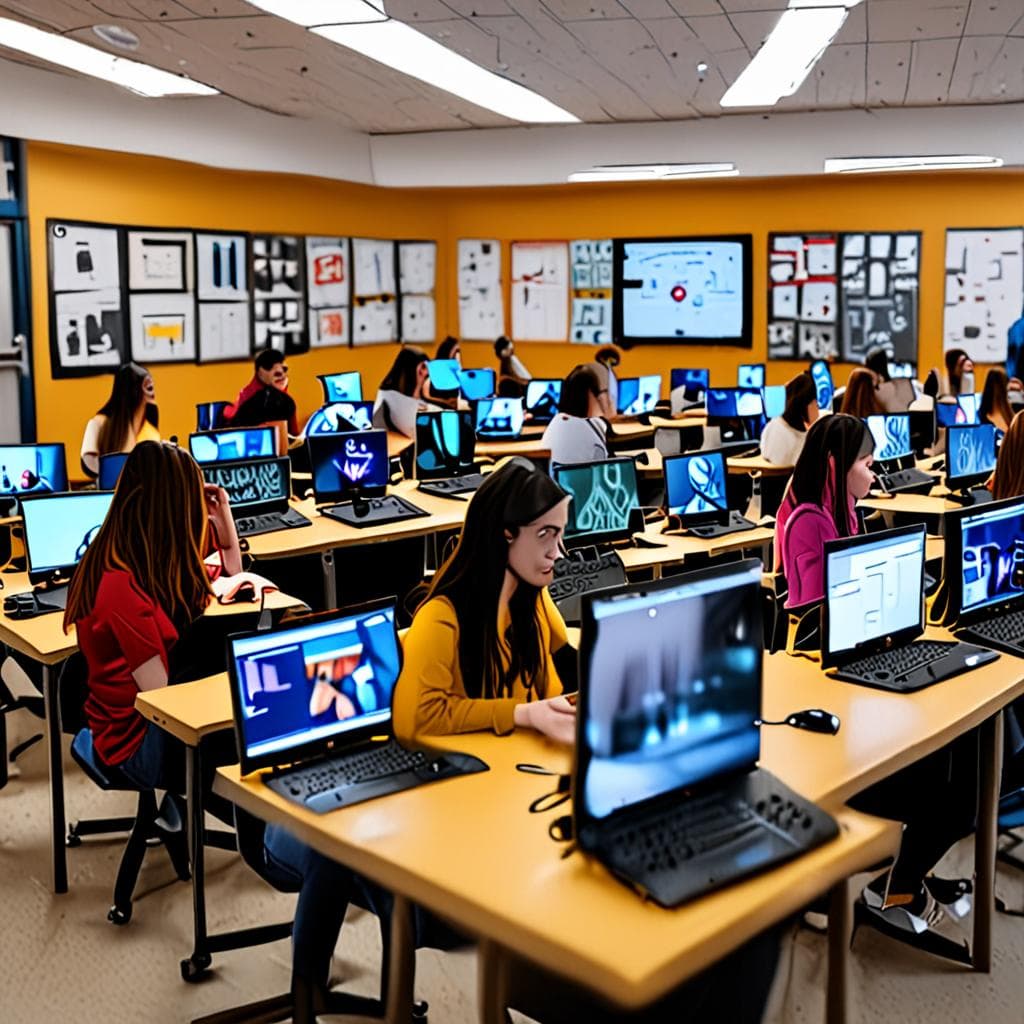
Empowering Minds: The Top 10 Free AI Tools Every Student Should Embrace
Anmol
Lead AI Researcher
Introduction
The landscape of education is evolving at an unprecedented pace, marked by the relentless integration of technology into learning environments. As traditional pedagogical methods grapple with the influx of digital advancements, artificial intelligence (AI) emerges as a beacon of possibility. Students today must navigate an increasingly complex and information-rich world, making effective study habits and resource utilization paramount. Harnessing AI not only empowers students but also cultivates a new dimension of learning—one that emphasizes efficiency and adaptability.
Imagine a future where every inquiry is met with immediate answers, study sessions are optimized for maximum retention, and homework assignments are completed in a fraction of the time. This is not just a hypothetical scenario but a burgeoning reality, given that numerous free AI tools have become accessible. Unlike traditional educational aids, these tools possess the unique ability to tailor learning experiences based on individual needs, contexts, and preferences. The confluence of innovative technology with everyday education introduces a vital mechanism for academic success.
In this landscape, it becomes essential for students to familiarize themselves with the best free AI tools available today. Such tools can enhance research capabilities, streamline communication, facilitate collaborations, and automate mundane tasks—transforming students into highly productive learners. This comprehensive guide outlines the top ten free AI tools that every student should explore to make their academic lives more manageable and effective.
Background, Evolution & Genesis
The roots of artificial intelligence can be traced back to the mid-20th century, with early explorations into machine learning and neural networks. The development laid the groundwork for future innovations, culminating in the algorithms used in today's AI tools. However, it wasn't until the 21st century that the education sector began to recognize the transformative potential of these technologies. The proliferation of smartphones and internet access allowed an explosion of educational resources, leading to a ripe environment for AI integration.
AI's role in education began primarily through adaptive learning systems that catered to individual student needs, refining their curricula in real time based on responses and engagement levels. As these systems gained traction, a wealth of free applications emerged, offering a diverse range of functionalities—from grammar checking to research aid to organization tools. The accessibility of these resources marks a democratization of technology in education, enabling even the most marginalized students to benefit from cutting-edge advancements.
The rise of platforms like Coursera and edX also highlights a significant cultural shift toward self-directed learning. These platforms often harness AI to provide personalized course recommendations and assess student performance, shaping tailored educational pathways for users. As industry experts increasingly advocate for lifelong learning, the amalgamation of free AI tools within academic settings becomes indispensable.
Progression in AI has opened the bandwidth for large-scale implementations across global educational frameworks. Rapid improvements in natural language processing, computer vision, and generative models have facilitated the creation of more intuitive and effective educational tools. As evidenced by reports from educational technology leaders, the landscape continues to evolve, with an unyielding focus on improving student outcomes through intelligent solutions.
Strategic Deep Dive & Technical Analysis
To further familiarize students with AI tools, it is imperative to delve deeply into their features, applications, and implications. Here are the top ten free AI tools students should consider:
1. Grammarly
Grammarly stands out as an AI-powered writing assistant designed to help students improve their writing skills. Leveraging sophisticated natural language processing algorithms, it offers real-time grammar and style suggestions, ensuring clarity and coherence in academic writing. Not only does it correct grammatical errors, but it also provides insights into tone, engagement, and word choice, allowing students to refine their writing according to specific requirements.
2. Google Scholar
Google Scholar is an indispensable resource for researching academic literature. This powerful search engine uses AI algorithms to index scholarly articles, theses, books, and conference papers, offering students easy access to quality sources. By analyzing citation metrics and relevance, it helps students discover how various studies interrelate, enhancing their understanding of a particular topic.
3. Quizlet
Quizlet utilizes AI to create customized study experiences through flashcards, quizzes, and games. With the help of machine learning algorithms, it adapts to students' learning styles and focuses on areas where they struggle, ensuring effective retention of knowledge. Its collaborative features also allow students to share resources and study together remotely.
4. ChatGPT
OpenAI's ChatGPT, a language model developed using the latest advancements in deep learning, can be a remarkable tool for students. It assists in brainstorming ideas, generating outlines for papers, and even crafting essays. Its conversational abilities enable students to engage in a dialogic learning process, facilitating deeper understanding and exploration of complex topics.
5. Canva
While primarily known for graphic design, Canva has adopted AI technologies to enhance its offerings. The platform allows students to create visually engaging presentations and documents effortlessly. AI-driven features such as design suggestions, automatic resizing, and layout recommendations simplify the creation process. This adaptability is crucial for students aiming to convey their ideas effectively.
6. Trello
Trello employs AI elements to facilitate project management among students. Using boards, lists, and cards, it helps students organize tasks effectively. AI-driven automation further enhances productivity by prioritizing items based on deadlines and collaborative needs. Systematic organization, coupled with visual appeal, enables strategic planning within academic settings.
7. Duolingo
Duolingo exemplifies the integration of AI within language learning. By utilizing advanced algorithms, it personalizes students' learning experiences based on performance. The app adapts to individual progress, providing targeted exercises that ensure retention and mastery of new languages, enhancing linguistic versatility for students.
8. Microsoft OneNote
Microsoft OneNote is a versatile note-taking tool that incorporates AI features to enhance information retention. It allows students to organize notes effectively, collaborate with peers in real time, and even transcribe lectures. Its AI capabilities further analyze notes for themes and significant points, easing the study process and ensuring critical information is readily accessible.
9. Wolfram Alpha
Wolfram Alpha is a computational knowledge engine that provides students with quick access to a plethora of factual information. It answers queries across various domains, including mathematics, science, and statistics, promoting an inquiry-based learning approach. This tool is particularly useful for supporting STEM students in problem-solving and data analysis.
10. Notion
Notion is a robust organization tool that allows students to create customized workspaces tailored to individual needs. Its AI capabilities assist in data organization, tracking performance, and facilitating productivity. Simple drag-and-drop features enable students to curate their academic resources in a visually appealing format, enhancing both functionality and usability.
These tools collectively represent a paradigm shift in learning dynamics, showcasing how technology can effectively collaborate with students to improve their educational experiences.
Global Market & Sociopolitical/Economic Implications
As the employment landscape shifts and industries increasingly demand tech-savvy professionals, the significance of AI in education cannot be overstated. The incorporation of these free tools contributes to a more profound transformation in the broader labor market, redefining expectations for competency and knowledge acquisition. Educational institutions must adapt curricula to incorporate AI literacy, ensuring students graduate with both fundamental and advanced technical skills.
Globally, the proliferation of free AI tools against a backdrop of rising educational inequity is a double-edged sword. While these tools democratize access to resources, they also risk exacerbating disparities among students with varying levels of digital literacy and infrastructure. Educational policymakers must prioritize equitable access to ensure all students harness the benefits of AI, particularly in underserved communities. For instance, a lack of consistent internet access can drastically hinder engagement with sophisticated tools, leaving some students disadvantaged.
The impact of AI on education is also closely related to economic factors, especially in developing nations where technology adoption paces slowly. AI-driven educational tools can serve as a catalyst for economic progress by enhancing skills training and employability among youth populations. Furthermore, the global economy increasingly favors individuals proficient in AI applications—driving students toward embracing digital tools as a means of strengthening their competitiveness in the job market.
From a regulatory perspective, the rise of AI tools poses ethical considerations regarding data privacy and algorithmic bias. As students engage with these platforms, their personal data may be collected and analyzed, leading to potential concerns about how such information is utilized. Educational institutions, developers, and policymakers need to collaborate closely to establish robust frameworks that prioritize student privacy and safeguard against misuse of data, fostering trust in technology for educational purposes.
Technical Challenges, Limitations & Neural Outlook
Despite the myriad advantages associated with the adoption of AI in education, technical challenges persist. AI systems are only as effective as the data they are trained on; consequently, biases in data inputs can lead to skewed outputs that reflect cultural or gender inequities. Developers must critically analyze the datasets used in AI tools to mitigate bias and ensure fair treatment for all students.
Moreover, the technology itself can sometimes hinder rather than help learning. Overreliance on AI tools may detract from students' cognitive skills, such as critical thinking and problem-solving. Balancing AI integration with traditional learning methods is essential to avoid diluting foundational skills that are crucial for academic success.
Looking ahead, the future of AI in education promises significant advancements. As AI technologies mature, tools will become increasingly sophisticated—personalizing educational experiences to an unprecedented extent. The introduction of augmented and virtual reality technologies could elevate learning modalities, effectively immersing students in environments that simulate real-world scenarios relevant to their studies. Furthermore, collaborations between tech companies and academic institutions will catalyze the development of new AI applications tailored specifically for educational settings.
In the next five to ten years, we can expect to see the proliferation of AI-driven outreach programs that bridge connectivity gaps, ensuring students from diverse backgrounds have access to high-quality educational tools. Embracing a holistic approach towards technological integration will shape a more equitable, innovative, and empowered generation of learners as we inch closer to a future underpinned by AI.
Final Authoritative Verdict & Synthesis
The integration of AI tools into educational environments signals a revolutionary shift in how students engage with learning. By recognizing the potential of free AI resources, students can bypass traditional barriers, optimizing their academic efforts and enhancing their overall educational experiences. However, adopting technology comes with its own challenges that necessitate a balanced approach encompassing data ethics, equitable access, and fostering traditional skill sets.
As technology continues to evolve, embracing and strategically implementing AI tools will equip students with the necessary skills to thrive in an ever-changing global landscape. In this new era, the convergence of education and technology paves the way for innovative and adaptive learners prepared to tackle future challenges with confidence.