
The Synthetic Engine: Deconstructing the Architectural Future of AI Content Creation in 2026
Anmol
Lead AI Researcher
The Epoch of Sovereign Synthetic Media: A Global Perspective
As we navigate 2026, digital media ecosystem dynamics have ruptured past simple text generation and static image diffusion into a fully realized paradigm of sovereign synthetic creation. What began at the turn of the decade as simple stochastic autocomplete routines has evolved into deep multi-agent networks capable of architecting complex digital experiences end-to-end. The global landscape no longer measures digital authority by volume of output; instead, authority is dictated by cognitive depth, real-time contextual adaptation, and structural verification across real-time feeds.
Enterprise organizations, media conglomerates, and software engineering entities have abandoned primitive prompt engineering in favor of unified cognitive architectures. In this new industrial baseline, artificial intelligence does not merely assist human creators; it acts as an autonomous substrate—synthesizing real-time sensor feeds, market intelligence, and deep historical corpora into hyper-personalized, high-fidelity media assets across every digital touchpoint.
This transformation is driven by fundamental breakthroughs in compute efficiency, real-time sensory grounding, and continuous agentic reasoning. As digital platforms become saturated with low-grade autonomous artifacts, the competitive advantage has shifted to systems capable of high-level semantic reasoning and rigorous factual verification. We are witnessing the birth of an era where synthetic creation is bounded not by model parameters, but by systemic integrity and architectural intent.
Understanding this trajectory requires dismantling traditional assumptions about content pipelines. The content stack of 2026 relies on a harmonious orchestration of open-weights foundational models, real-time vector memory systems, and continuous human-in-the-loop verification nodes. This report deconstructs the structural mechanisms defining this shift, auditing the core technologies, economic forces, and architectural paradigms that govern the future of content generation.

Background, Evolution, and the Genesis of Reasoning-Grade Creation
To contextualize the synthetic content boom of 2026, one must analyze the structural limitations that constrained earlier iterations of artificial intelligence. The initial generative explosion of 2022–2024 relied almost exclusively on ungrounded autoregressive transformers. These early architectures, while impressive in raw lexical output, lacked internal world models, deterministic logical consistency, and real-time state awareness. They produced persuasive prose plagued by systemic hallucinations and contextual drift.
Between 2024 and 2025, the software industry experienced a critical pivot. As documented in our research on open-source model architectures, the central bottleneck shifted from parameter count to reasoning inference. The emergence of open-weights models like Llama 3, alongside specialized models from OpenAI, shattered the monolithic advantage previously held by closed API monopolies. Developers gained the ability to fine-tune high-parameter base models locally, grounding them against domain-specific knowledge bases and executing precise tool-use protocols.
By early 2026, the convergence of test-time compute expansion and continuous reinforcement learning from system feedback enabled generative engines to act as autonomous researchers. Instead of executing isolated inference calls, modern platforms deploy self-correcting agent chains that conduct preliminary investigative audits, verify source integrity against decentralized ledgers, assemble structural drafts, and execute continuous code execution tests prior to publishing final media assets.
Furthermore, the physical separation between text, visual, audio, and spatial media has vanished. Contemporary foundational models are natively multimodal from weights up, processing raw visual tokens, spatial acoustics, and structural code in a unified latent space. Consequently, an enterprise content system in 2026 does not output an isolated blog post or image; it generates a holistic digital campaign containing dynamic dynamic video sequences, interactive spatial layouts, and personalized narrative pathways tailored to individual telemetry profile nodes in real time.
Strategic Deep Dive: The 2026 Synthetic Production Architecture
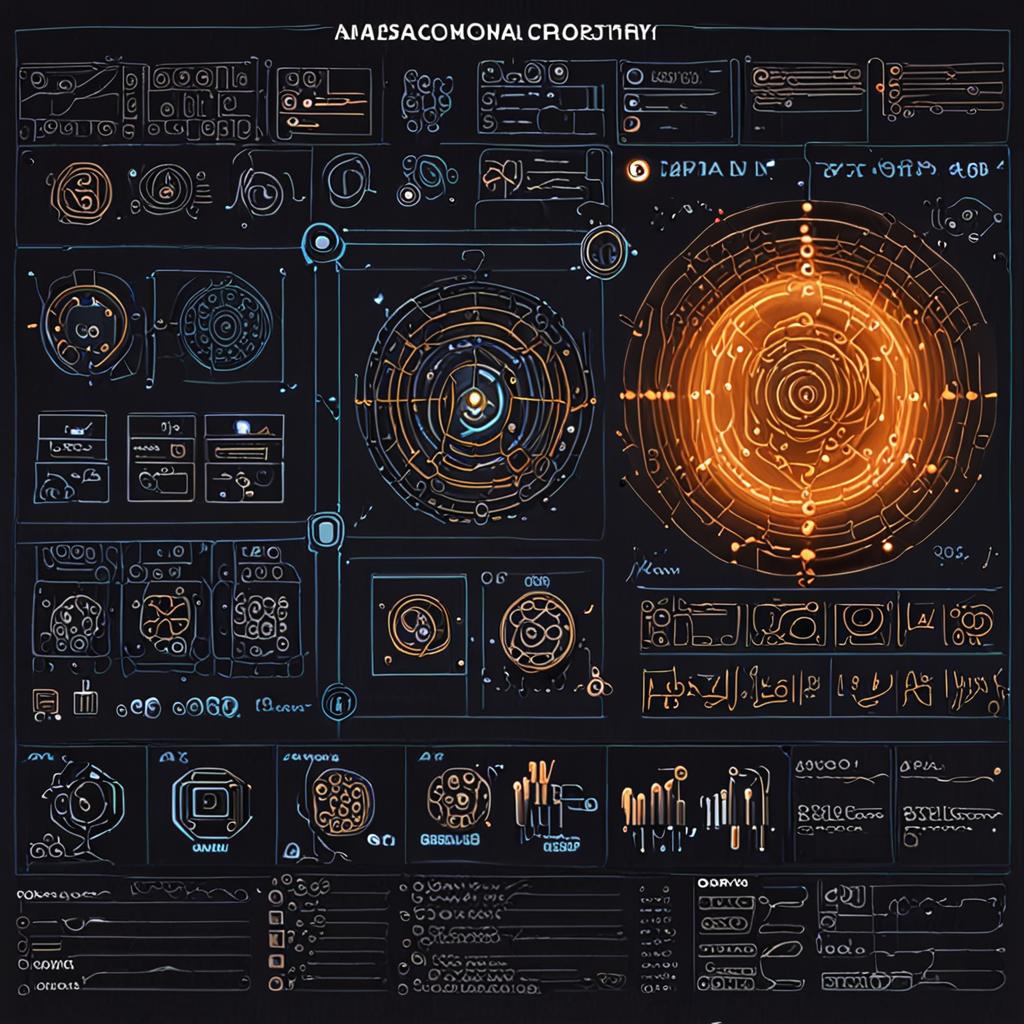
Modern content creation platforms operate on a multi-layered architectural model engineered for zero-trust reliability and continuous output optimization. At the core of this stack is the Agentic Orchestration Layer. Built predominantly on performance-tuned environments using Python for orchestration logic and Next.js for real-time frontend delivery, this layer manages specialized autonomous agents assigned to discrete content operations: telemetry ingestion, semantic mapping, narrative structuring, visual synthesis, and dynamic code compilation.
The operational efficiency of this system relies heavily on rigorous verification frameworks. As explored in our landmark analysis on expert synthesis protocols, ungrounded generative content fails enterprise deployment standards. To overcome this, 2026 architectures implement real-time Retrieval-Augmented Generation (RAG) coupled with Graph Neural Networks (GNNs). This hybrid framework links dynamic generative models to deterministic enterprise knowledge graphs, validating every factual statement, data visualization, and technical assertion prior to asset compilation.
Consider the complete lifecycle of a high-tier corporate technical report generated in 2026:
First, an Ingestion Agent scans global market feeds, developer repositories, and proprietary telemetry databases. Second, an Investigative Planner Agent structures an epistemic audit map, outlining core technical claims, logical dependencies, and required visual evidence. Third, a specialized Multimodal Synthesis Agent executes parallel rendering calls to underlying diffusion and video latent spaces, dynamically generating customized video demonstrations, interactive diagrams, and verified code blocks. Finally, a Ground Truth Audit Node, executing strict epistemic auditing frameworks, verifies that every cited code parameter compiles correctly and cross-references external datasets for absolute precision.
This structural transformation has also revolutionized localized media deployment. Content engines no longer generate static localized translated assets. Instead, dynamic semantic translation pipelines adapt tone, localized regulatory requirements, visual iconography, and culturally specific idioms on the fly, publishing targeted assets tailored to localized consumer environments across global regions within seconds.
Global Market, Sociopolitical, and Economic Implications
The hyper-saturation of autonomous content creation platforms has sent shockwaves through the global macroeconomic structure. The digital marketing, software documentation, and corporate communications industries—traditionally reliant on labor-intensive human execution pipelines—have undergone structural realignment. Talent is no longer allocated to manual asset execution, but rather to strategic cognitive curation, system architecture optimization, and ethical governance auditing.
This economic realignment mirrors broader trends in physical automation. Just as physical autonomous systems are scaling seamlessly into urban transport infrastructure—exemplified by autonomous fleet deployments across major metropolitan markets—digital autonomous agent swarms are managing complex narrative ecosystems without continuous human intervention. This shift has unlocked unprecedented margins for early-adopter enterprises, while creating significant disruption for legacy agency models bound to billable-hour execution frameworks.
From a regulatory standpoint, global legislative bodies have responded by enacting strict synthetic media disclosure mandates and digital provenance standards. The widespread deployment of cryptographic watermarking frameworks, such as C2PA (Coalition for Content Provenance and Authenticity), has become mandatory across sovereign digital borders. Content engines operating in 2026 must sign generated media outputs at the neural layer with immutable cryptographically verifiable signatures detailing model provenance, training lineage, and pipeline execution logs.
Furthermore, intellectual property jurisprudence has evolved radically. The international legal concensus now enforces a strict dichotomy: raw, uncurated synthetic outputs are classified within the public domain, whereas hybrid human-machine architectures incorporating verified human structural curation and custom proprietary knowledge models retain robust copyright protections. Consequently, enterprise value resides not in model ownership itself, but in proprietary data graphs and auditing protocols used to ground model inference.
Technical Bottlenecks, Limitations, and Neural Outlook
Despite the remarkable capabilities of 2026 synthetic creation engines, fundamental technical friction points persist. Chief among these is the systemic threat of model collapse—a mathematical phenomenon where generative models trained recursively on synthetic outputs degrade in semantic variance, factual depth, and conceptual nuance. As the public web becomes heavily populated with synthetic text and media, AI research laboratories must construct high-fidelity filtering mechanisms to isolate organic, human-originated training tokens from synthetic noise.
Another critical bottleneck lies in real-time inference latency and physical compute unit economics. While quantized models running on localized edge hardware have improved consumer access, rendering high-resolution, real-time 3D spatial environments and dynamic high-framerate video pipelines on demand requires vast compute power. Strategic data center energy consumption and chip supply chain stability remain critical constraints governing the pace of enterprise synthetic integration.
Looking toward the 2030 horizon, the trajectory points decisively toward zero-latency hyper-dynamic content environments. We anticipate the rise of continuous neural streams—media architectures that do not produce static pre-rendered files at all. Instead, digital interfaces will render individualized sensory media directly inside consumer viewports in real time, continually adjusting narrative arcs, interactive UI components, and technical complexity based on direct physiological and cognitive feedback loops from the user.

Authoritative Synthesis and Verdict
The future of AI content creation in 2026 is defined not by automated volume, but by architectural precision, ground-truth integration, and real-time multimodal orchestration. Organizations relying on outdated, ungrounded generative pipelines risk complete cognitive devaluation in an increasingly discerning digital market. Success in this new epoch demands a strategic commitment to continuous epistemic auditing, proprietary knowledge graph construction, and robust agentic pipeline design.
The modern content creator is no longer a writer, designer, or video editor in isolation, but a Chief Cognitive Architect—guiding synthetic swarms to execute complex media strategies with absolute operational reliability. Those who master the synthesis of open-weights foundation models, deterministic verification graphs, and agentic workflows will define the narrative horizon for the next decade of human-machine collaboration.